

In a world where everyone is exposed to a variety of pathogens daily, a strong immune defense is essential. Strengthening children’s immune systems is therefore a topic that particularly concerns parents. The body’s natural defenses primarily serve to filter and neutralize pathogens such as viruses and bacteria. A healthy immune system maintains and strengthens health, helping illnesses heal more quickly. A functioning immune system thus forms a strong foundation for children to develop healthily.
Children’s immune systems are not the same as adults’ because they are not yet fully developed. Medically speaking, they are considered immature. This means they do not yet possess their full functionality. Most pathogens are still unknown to them, which is why children, especially in the first three years of life, have infections significantly more often than adults. The child’s immune system still needs to train to provide an effective defense.
One component of the immune or defense system is the immune cells, the white blood cells (leukocytes), which are formed by organs such as the lymph nodes and tonsils, the thymus gland, and the bone marrow. As phagocytes and killer cells, they combat both pathogens and foreign substances that have entered the body.
Did you know? As long as the immune system is still developing, the thymus gland is particularly active and therefore significantly larger in children than in adults.
In addition to immune cells, various signaling substances play a crucial role in an immune response. Many of these signaling substances are formed by white blood cells, which, for example, activate each other. The more immune cells are active, the more effective the defense system. Diseased body tissue also releases substances that trigger the immune system. For example, fever is triggered by these signaling substances.
If a pathogen infects the body, the defense system responds with an immune response, which varies in intensity depending on the type of pathogen and the extent of the infection. The immune cells either directly combat the pathogen or produce antibodies against it. However, this reaction is not yet as mature in children as in adults.
Innate versus Acquired Immune System
Experts distinguish between two different categories in how the immune system reacts: the innate and the acquired immune response. Both systems are present from birth, and the innate immune response is even fully functional and active from the start. However, it acts non-specifically. This means that pathogens are combated more or less indiscriminately.
The acquired immune system, on the other hand, reacts specifically with a particular defense mechanism by producing special antibodies against already known pathogens. However, it must first learn how best to combat these pathogens. This happens over time and with each infection. A so-called immune memory is formed.
The immune system only works effectively if there are enough functional immune cells and signaling substances. This requires that the organs of the immune system are healthy, produce enough white blood cells, and provide antibodies. With the help of various measures, parents can support their children in building a robust immune system.
A balanced diet is crucial for the development of a strong immune system in children, as numerous nutrients and vitamins play a key role:
Trace elements such as zinc, selenium, iron, and copper also play a crucial role in the immune system and should be adequately consumed through food. Zinc, for example, is found in red meat, cheese, nuts, and whole grains.
Probiotics are “good” bacteria that naturally occur in the gut and colonize the intestinal lining there. Their positive effect is that they support digestion and ensure that harmful bacteria and pathogens are less likely to settle. They are found, among other things, in yogurt and fermented foods like sauerkraut. They help build a healthy gut microbiome, which in turn is very important for immune defense.
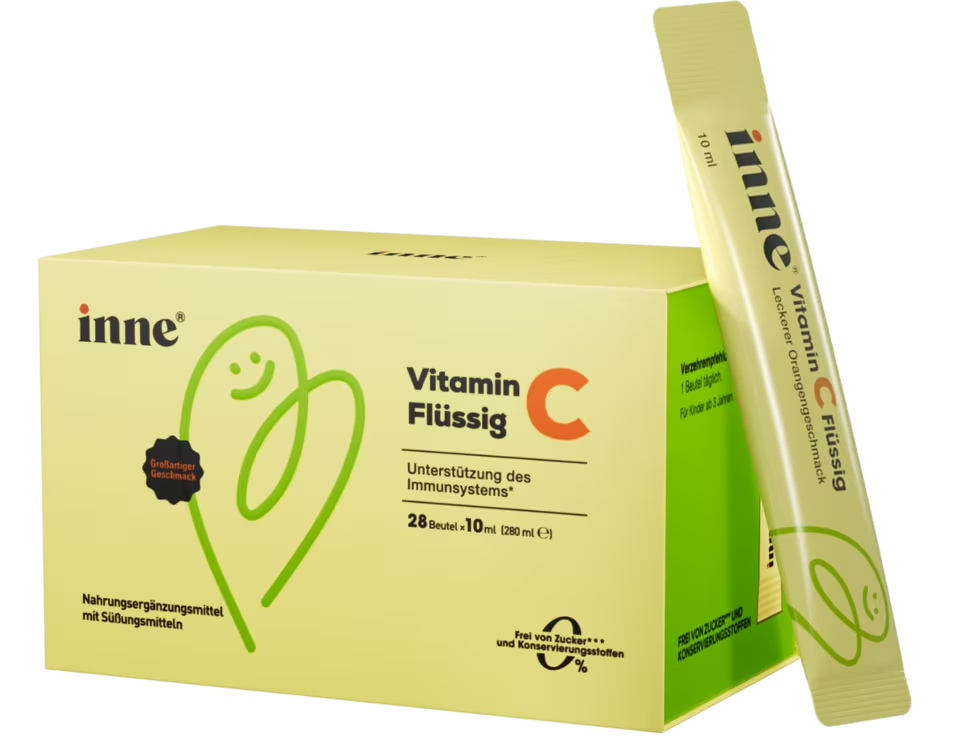
inne® Vitamin C Flüssig
*Calcium und Vitamin D werden für ein gesundes Wachstum und eine gesunde Entwicklung der Knochen bei Kindern benötigt. Zusätzlich unterstützen Magnesium, Vitamin K und Zink die Erhaltung gesunder Knochen.
*Vitamin C trägt zu einer normalen Funktion des Immunsystems bei.
***enthält < 0,5g Zucker pro 100 ml
Sufficient sleep is essential for children to strengthen their immune system. During sleep, the body recovers and produces important immune cells. Depending on age, experts recommend a sleep duration of eight to 13 hours per day for children aged two and older and adolescents.
Regular physical activity is crucial for the health of the immune system. Activities such as cycling, hiking, swimming, or team sports not only strengthen the immune system but also promote overall health. Experts recommend that children and adolescents be physically active for at least one to two hours daily.
Impfen nicht vergessen
Eine durchlaufene Infektion kann zur Stärkung des Immunsystems beitragen. Dennoch sollten Eltern ihre Kinder nicht jedem möglichen Erreger aussetzen, denn manche Infektionen können schwere Verläufe haben und belastend für die Gesundheit des Kindes sein. Gegen zahlreiche Infektionskrankheiten gibt es inzwischen Impfungen, zu denen Kinderärztinnen und Kinderärzte raten. Sie helfen dabei, das sich noch entwickelnde Immunsystem eines Kindes zu entlasten und das Risiko für mögliche Folgeschäden einer Infektion zu reduzieren.
Welche Impfungen für die Kinder zu empfehlen sind, sollten mit der Kinderärztin oder dem Kinderarzt abgeklärt werden.
Good hygiene habits are important to keep pathogens away. Children can also relieve their immune system with simple methods, for example, by
Strengthening the immune system doesn’t always require medication. Some natural substances and home remedies can also help support the immune system. Depending on individual intolerances, most of them are suitable for both adults and children, often from the age of one or two. These include, for example:
Strengthening children’s immune systems is a multifaceted process that includes a balanced diet, sufficient sleep, regular physical activity, good hygiene practices, natural substances and home remedies, and vaccinations.
Integrated into children’s daily lives, these simple measures help build a strong and healthy immune system. However, it is always important to seek medical advice before making changes to a child’s diet or lifestyle.
This vitamin is crucial for building and maintaining a strong immune system. Learn more.