Our children are increasingly stressed – as various studies have shown in recent years. It is just as important for children as it is for adults to find moments of calm and mindfulness. Mindfulness means being present in the present moment and consciously paying attention to what is happening without judgment. This practice can not only promote relaxation, but also strengthen emotional well-being. Here are some child-friendly mindfulness exercises that you as parents can easily integrate into everyday life and practice with your children.
Breathe in, breathe out - show your children the power of breathing
Sit down together with your child and take a few deep breaths. Observe together how the belly rises and falls as you breathe in and out. You can also try counting to three together as you breathe in and out. This helps to calm the mind and bring the child into the moment. This exercise is particularly simple and can also be done by children at school or while playing with friends, for example, if they are overwhelmed.
Our Product Recommendation:
inne® Whole Brainne® DHA memo
- With plant-based DHA from the marine microalgae Schizochytrium sp.
- Supports healthy brain function*
- With nervonic acid from natural sources
- Sugar-free** and without preservatives
*DHA contributes to the maintenance of healthy brain and vision function.
*The positive effect occurs with a daily intake of 250 mg DHA
**Contains< 0.5 g sugar per 100 g
Sharpen the senses
Nature relaxes! Go for a walk with your child and explore the surroundings together with all your senses. Touch the bark of a tree, listen to the birds singing, smell the flowers and consciously taste every piece of fruit you find. This exercise promotes mindfulness of your surroundings and helps you to consciously experience the moment.
Mindful eating tastes even better!
The next time you eat together, invite your child to eat mindfully. Turn off all distractions such as TV or cell phones and concentrate fully on the food. Encourage your child to chew each bite slowly and be aware of the taste. This exercise can not only improve digestion, but also increase awareness of food and its origin and bring peace to the body and mind.
Stories and games
Use stories or games to teach mindfulness principles. For example, you could make up a story together about an enchanted forest in which the animals learn to be mindful and pay attention to their surroundings. Or you could play the game “I see what you don’t see”, where you name objects together that you see, hear, smell or feel in your surroundings. Games are a particularly good way to teach children new things.
Routine in the morning or evening: gratitude exercises
Before going to bed or after getting up, you can write down or name three things together with your child that they are grateful for. This can help to promote a positive attitude and raise awareness of the little joys in life. And you as parents can join in straight away!
Mindfulness is a skill that can accompany children throughout their lives. Through regular practice, children can learn early on how to deal with stress, concentrate better and develop a deeper understanding of themselves and their surroundings. So make time regularly to experience mindful moments together with your child.
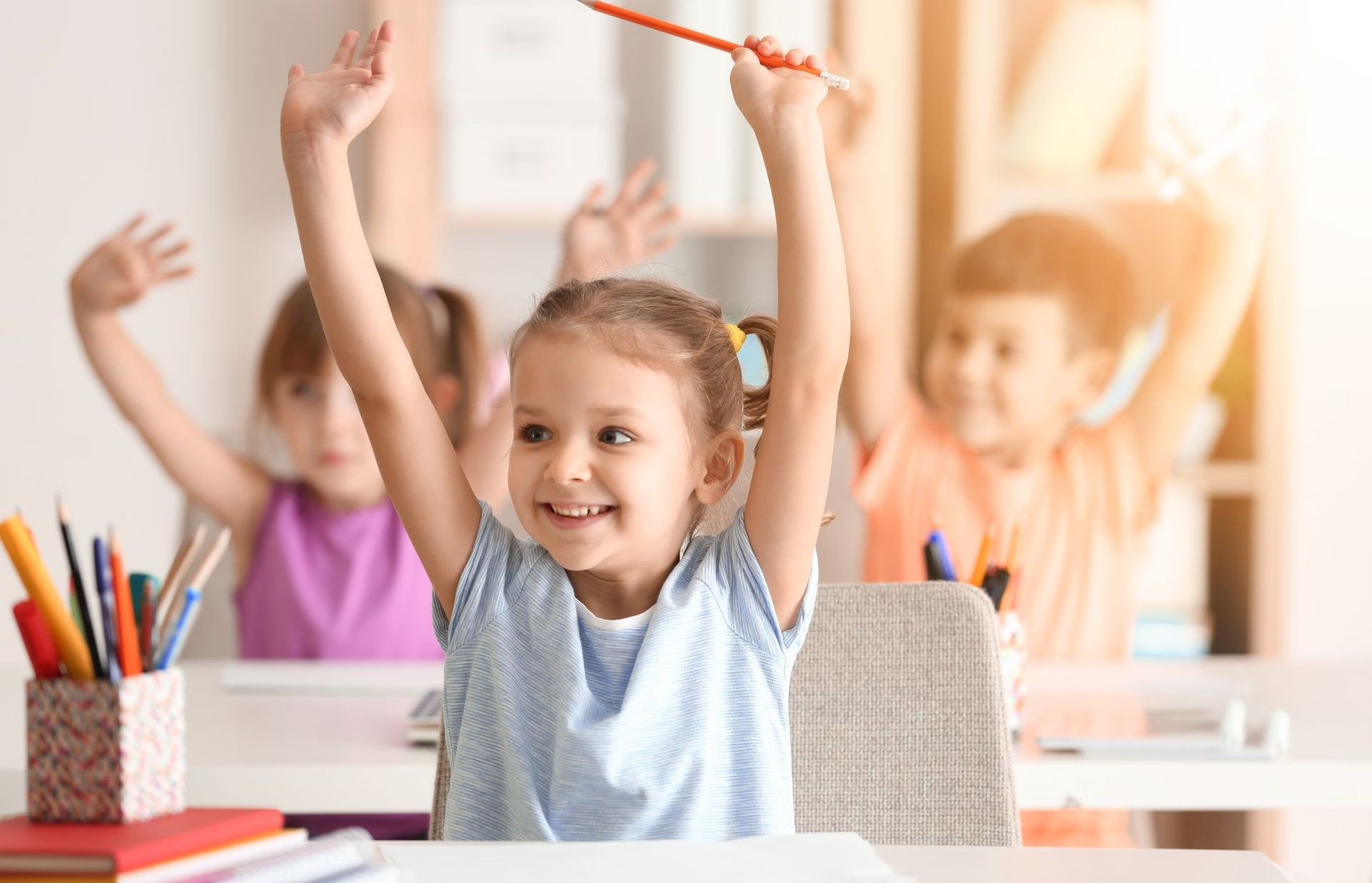
Everyday school life can be quite exhausting for our little whirlwinds and often their energy is completely used up during lessons.