Coping with stress is just as important for children as it is for us adults. The ability to relax and reduce stress is crucial for the emotional well-being and mental health of young and old. However, we need to actively teach ourselves and our children the techniques to do this – because relaxing is much more than just lying on the couch! Fortunately, there are a variety of simple relaxation techniques and activities that can help children deal with stress and find a sense of calm.
Practice makes perfect - even when it comes to relaxation!
The benefits of regular relaxation exercises for children’s well-being are manifold. When children learn relaxation techniques, they develop a better awareness of their own bodies and emotions. They learn to recognize symptoms of stress at an early stage and react to them appropriately – ideally, this prevents excessive demands that end in crying, anger or physical confrontations.
In addition, regular relaxation training can boost children’s self-confidence and self-efficacy. When they realize that they are able to manage their own stress, they feel more competent and better equipped to deal with life’s challenges. This ability will not only benefit them in kindergarten and when living with their family, but also later at school and in adulthood.
Last but not least, regular relaxation training also promotes children’s cognitive performance. By learning to relax and calm their minds, they can concentrate better and process information more effectively.
Our Product Recommendation:
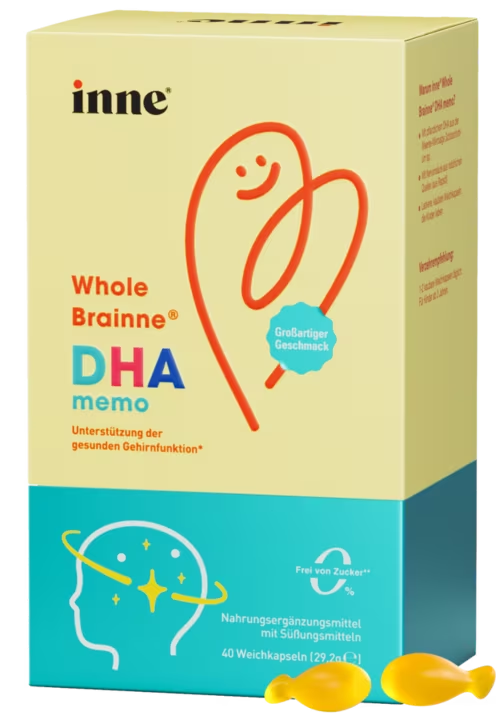
inne® Whole Brainne® DHA memo
- With plant-based DHA from the marine microalgae Schizochytrium sp.
- Supports healthy brain function*
- With nervonic acid from natural sources
- Sugar-free** and without preservatives
*DHA contributes to the maintenance of healthy brain and vision function.
*The positive effect occurs with a daily intake of 250 mg DHA
**Contains< 0.5 g sugar per 100 g
Breathing exercises for the whole family
You have probably already heard or noticed for yourself that conscious breathing can have a relaxing effect. One of the simplest and most effective techniques, which is also easy for children to implement, is deep abdominal breathing. Children can learn to breathe in deeply through their nose and watch their belly fill with air. They can then breathe out slowly through their mouth and feel their whole body relax. This simple exercise can help little ones to calm down in stressful situations and clear their thoughts. Practice belly breathing together at the weekend, for example, while cuddling in bed or on the sofa.
For body awareness: tense and relax muscles
Another popular technique is progressive muscle relaxation. This involves children tensing different muscle groups one after the other and then relaxing them again. For example, they can start by clenching their fists and then relax them again, followed by their arms, shoulders, facial muscles and so on. This helps children to recognize and consciously let go of tension in their bodies.
Get creative and switch off
In addition to these physical techniques, creative activities can also help to reduce stress. Painting, crafting or playing a musical instrument can help children to relax and focus their thoughts on something positive – sometimes alone and sometimes with friends or family. These activities allow children to express what they are experiencing and at the same time take a break from stressful situations.
Make relaxation a priority for the whole family
Overall, active relaxation is an important part of a child’s development. By learning simple relaxation techniques and regularly practicing relaxation exercises, children can learn to reduce stress and develop a sense of calm and serenity that will benefit them throughout their lives. Once they have internalized these techniques, they can fall back on them more easily in acute stress situations.
Everyday school life can be quite exhausting for our little whirlwinds and often their energy is completely used up during lessons.