Is your child a little storyteller or rather reserved when it comes to chatting? Language development is very individual and at the same time an essential part of a child’s development. Language is not only a means of communication, but is also crucial for self-development and for building social relationships. Especially in the first years of life, when the brain is particularly receptive, parents can make a big difference with small measures.
Read aloud: Discover the world of stories
Reading aloud is one of the most effective and at the same time most enjoyable ways to promote your child’s language development. When children are read stories, they expand their vocabulary and their listening comprehension and imagination are strengthened. Look for age-appropriate books and make reading aloud interactive by asking questions about the story or letting your child draw pictures. Especially in the evening, reading aloud is a good way to wind down and process the day.
Our Product Recommendation:
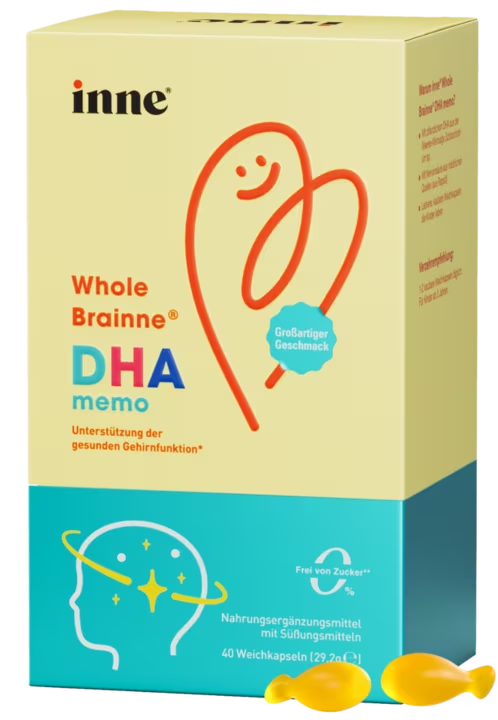
inne® Whole Brainne® DHA memo
- With plant-based DHA from the marine microalgae Schizochytrium sp.
- Supports healthy brain function*
- With nervonic acid from natural sources
- Sugar-free** and without preservatives
*DHA contributes to the maintenance of healthy brain and vision function.
*The positive effect occurs with a daily intake of 250 mg DHA
**Contains< 0.5 g sugar per 100 g
Singing and rhyming: discovering the melody of language through play
Children love music and melodies! Singing is therefore a great playful way to learn and internalize language. Children not only learn new words, but also the rhythm and structure of the language. Music and rhythm help to recognize speech patterns more easily and promote memory. For young children in particular, songs support the formation of syllables and sounds, which later become the basis for speech. And the best thing is that singing and rhymes make learning fun and close, which makes it easier. Get out the children’s song playlist and sing along!
Everyday conversations: Integrating speaking together
Talk to your child – just as you would with other people in everyday life. If children are actively involved in everyday conversations, for example when cooking, shopping or going for a walk, there are plenty of opportunities to learn new words and internalize grammar. Explain to your child what is happening and ask questions to which they can respond. Your child doesn’t always have to speak correctly – leave enough space to try out words and be creative. The more a child is allowed to speak for themselves, the more confident they will become in the language.
This exchange is particularly important between the ages of two and four, when the child is trying out their own words and sentences. By responding to what your child says and asking questions, you show your child that their language is valued. This not only strengthens their language skills, but also their self-confidence.
Listening and patience: creating space for language development
Don’t put pressure on yourselves – language development takes time and patience. It is particularly important to give your child the space to express themselves. It is best not to correct every mistake immediately, but instead let your child try the sentence again themselves. When a child realizes that they are really being listened to, they are more motivated to develop their language skills and venture into more complex conversations.
Use media more consciously
In addition to books, digital media can also be a great help for children to learn to speak. However, it is crucial how they are used. Make sure that your child’s media time is age-appropriate and don’t leave your child alone with the content. For example, if you want to show your child a video, sit down together and talk about it afterwards – this way you combine the visual experience with language and strengthen comprehension and vocabulary.
This blog post is about the most well-known vitamin: vitamin C! Why vitamin C is so important for children and how it can be integrated into the daily diet.