

Child development

Reaching milestones

A child’s development is a fascinating and complex process that begins in the womb. It includes various aspects such as physical, cognitive, and emotional growth stages. The individual developmental stages that children can—and, with healthy development, should—reach at a certain age are defined by so-called milestones. Whether and to what extent they reach these milestones depends on various factors. These include internal factors such as genes and hormones that guide development. External influences such as the environment and living conditions also play a role in children growing up. For example, parents’ level of education, poverty, or the quality and extent of media consumption can affect a child’s development. Parents and caregivers play important roles as attachment figures in a child’s development and can support and encourage it.

Physical development

Physical development in children includes changes in height, weight, and motor skills. In the first years of life, children experience rapid growth. Key milestones in motor development include sitting, crawling, walking, jumping, climbing stairs, and balancing (balance control), as well as speaking. At school age, growth slows somewhat, but fine motor skills and coordination improve significantly.

Alongside motor skills, sensory abilities also continue to develop; together, they enable children to explore their environment and learn.
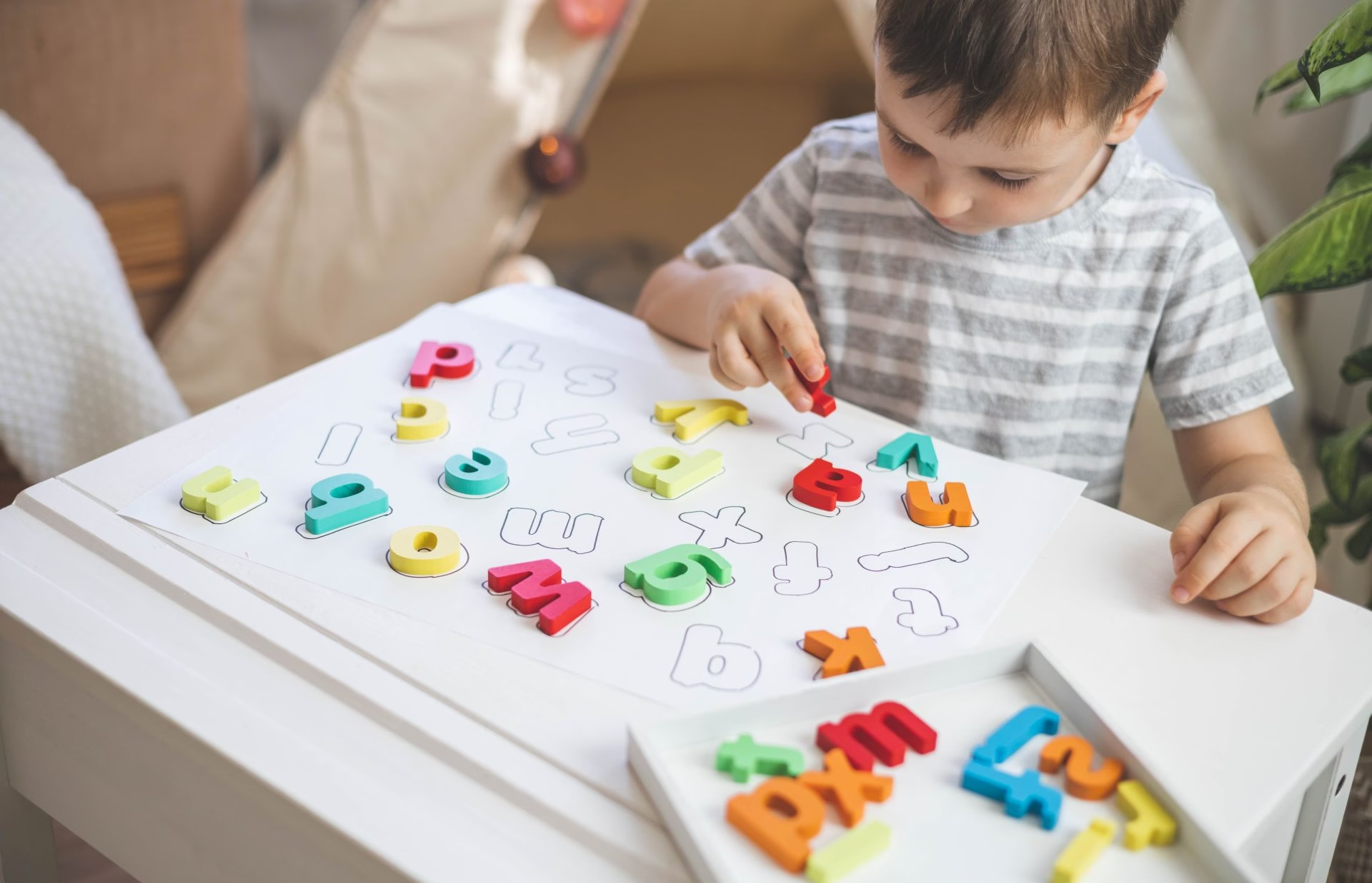
  • Infants/babies (0–2 years): During this phase, children develop basic motor skills such as lifting their head, sitting, crawling, and eventually walking. They learn to grasp and hold objects intentionally. Sensory development begins in the womb. Newborns can already see, hear, smell, taste, and feel, for example.
  • Toddlers (2–5 years): Children improve their hand-eye coordination and gross motor skills. For example, they can build a tower of blocks or start eating with cutlery. They learn to run, jump, perform more complex movements, and speak. Fine motor skills and the five senses become increasingly refined. Language comprehension develops.
  • Children (6–11 years): At this stage, dexterity and coordination improve, which shows in sports or dancing and in fine motor skills such as writing and drawing. For example, children no longer just hold a pencil—they learn to guide it precisely. Learning music and playing an instrument is also particularly easy at this age.
  • Teenagers (12–18 years): During puberty, profound physical changes occur as the child matures into an adult. Adolescence is characterized by further growth spurts, the development of the genitals, and sexual maturation. This is also linked to identifying with one’s own gender. This phase ends when growth is complete.

Cognitive development

Cognitive development, often also referred to as mental or intellectual development, relates to thinking, learning, and, for example, problem-solving. Like physical development, cognitive development progresses step by step. An interesting developmental model was proposed by psychologist Jean Piaget.

Newborns and babies up to two years old, for example, are still strongly shaped by reflexes, but they already explore their environment with all their senses. As they get older, more complex behaviors increase, as children’s thinking and understanding—as well as their responses to experiences—become broader and more precise. They learn to think logically and abstractly, develop a growing imagination, and increasingly question connections.

More products from inne®

Emotional and social development

Emotional intelligence—understanding and expressing emotions—is an essential part of child development. Children first have to learn to identify, understand, and respond appropriately to their own feelings and those of others.

  • Infants/babies: Children develop emotional bonds very early and begin to show joy, fear, anger, and sadness. They usually express their feelings spontaneously and still without control. Social learning also begins early, as early as four to six weeks of age.
  • Toddlers: Toddlers learn to identify and categorize their emotions. They can control them better and increasingly show empathy—meaning they can put themselves in others’ shoes and, for example, feel compassion. First phases of defiance can be observed.
  • Children: Interpersonal relationships and friendships become more important. Children develop a deeper understanding of complex emotions and social norms.
  • Teenagers: Psychological adjustments occur that, like physical changes, take some time. They are often uncoordinated. One reason is the hormonal changes that come with the maturation process. Crisis-like situations, protests against authority, and sometimes depressive moods are not uncommon.

Good to know

There are three qualities an attachment figure—parents or caregivers—should have for children to develop emotionally in a healthy way: familiarity, availability, and reliability. This means, for example, that the attachment figure is always available to the child (throughout the entire course of childhood development), regardless of where the child is. For instance, a longer-term absence (deprivation) of the attachment figure can negatively affect a child’s attachment behavior. This does not necessarily happen intentionally. Sometimes an illness—combined with a longer hospital stay—is the reason why the child and attachment figure cannot see each other regularly. In such cases, care should be taken to ensure that a (preferably familiar) person is present with the child, with whom they can build a relationship.
Tips for supporting development

Parents and caregivers can make a major contribution to children developing in a healthy way. Their tasks include, among other things, creating the right environment and providing the resources children need as they grow up.

  • Early support: The first years of a child’s life are crucial for brain development. Provide a stimulating environment with lots of love, give the child attention, and create opportunities to learn.
  • Enough time: Child development takes time. When a child reaches a particular milestone varies from one child to another. Children also need more time than adults to complete tasks. So there’s no point in rushing—offer a helping hand when needed.
  • Every child is unique: Since every child develops at their own pace, comparisons with other children of the same age are not recommended. Parents should therefore avoid measuring their child’s abilities against those of others.
  • Role models: Children learn by imitation. Modeling positive behavior is an effective way to support development.
  • Clear structure: Toddlers in particular need guidance to develop in a healthy way. For example, a structured daily routine, recurring rituals, or rules of behavior can help parents give their children a sense of security, strengthen them emotionally, and provide direction.
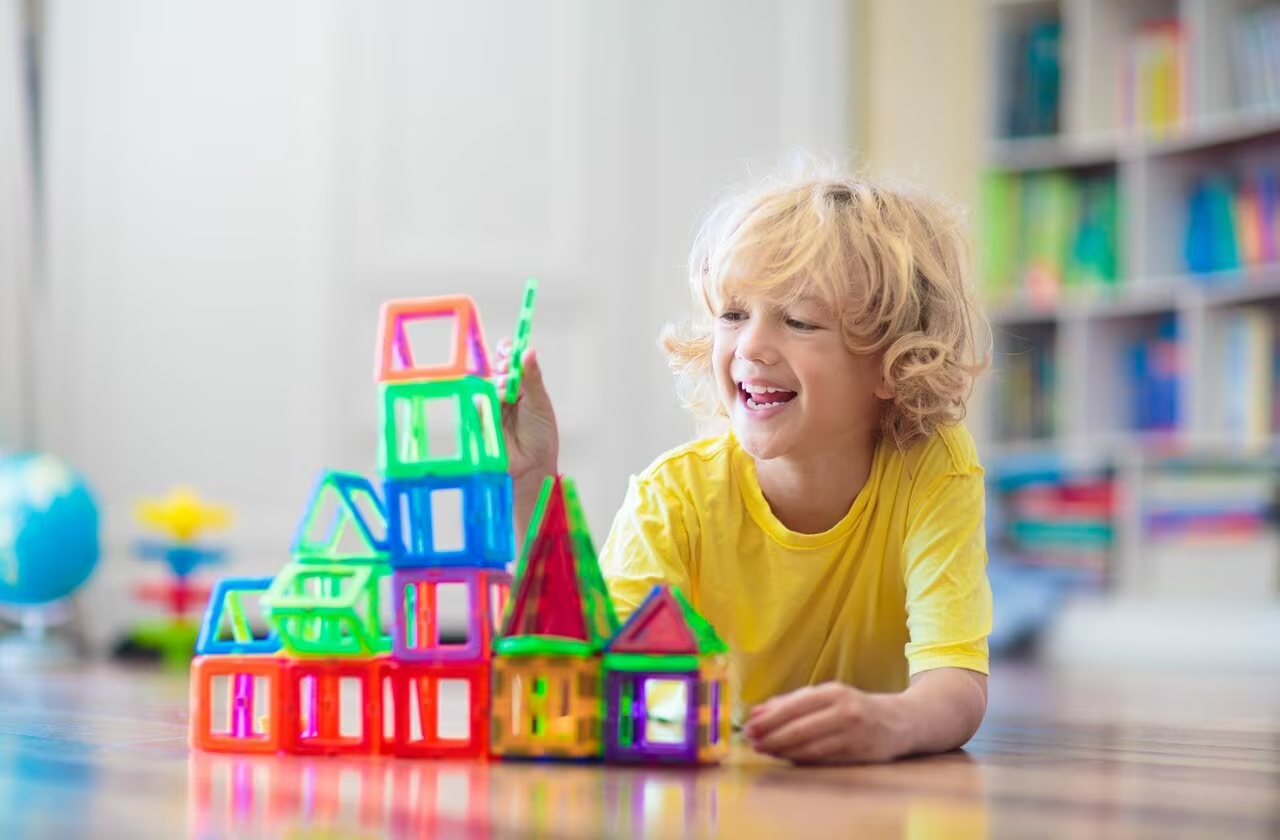
  • Learning through play: Play is more than just entertainment; it’s an essential part of learning and development. So make time, let your child be a child, and play with them.
  • Health and nutrition: Regular health check-ups and a balanced diet are important for a child’s healthy development. Children up to the age of six and adolescents aged 12 to 14 are legally entitled to health and preventive check-ups (U1 to U9 and J1). As part of these examinations, pediatricians assess the child’s current developmental status and, if necessary, initiate measures to support development. When it comes to nutrition, special attention should be paid to protein, calcium, and vitamin D, which are crucial for bone and muscle growth and the resulting physical strength.

Conclusion

A child’s development is a multifaceted process with individual differences. Children generally go through similar developmental stages, but they do so at their own pace. Every child is an individual, so parents and caregivers should create an environment that supports their unique abilities and interests.


Why B vitamins are essential for children’s energy, nerves, focus, and growth. Food tips and guidance for daily intake.