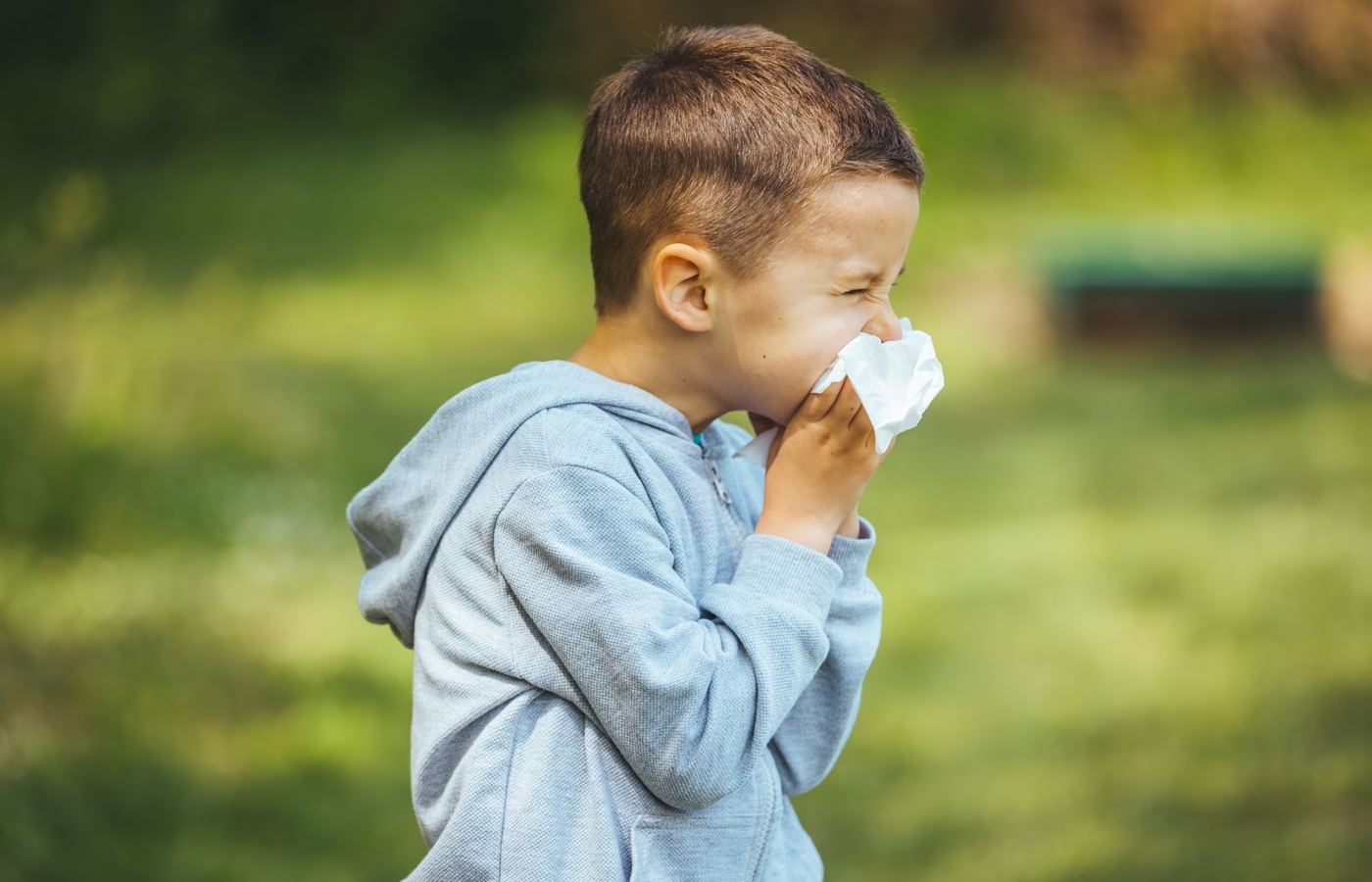
Boy wiping his nose.

Allergies & Intolerances - when the gut has a say

More and more children are sensitive to certain foods, pollen, or environmental substances. Allergies and intolerances are no longer uncommon, and many parents ask themselves: Why is my child affected? An important key to the answer lies in the gut.

A sensitive system with a big impact

A very important part of the immune system resides in our largest digestive organ. The gut is in constant communication with the outside world. With every bite, it checks what is allowed into the body and what is better kept out. If this distinction doesn’t function smoothly, the immune system can overreact, and substances that are actually harmless are suddenly classified as a threat. The result: allergic reactions or food intolerances. Allergies are therefore immune reactions of the body, or more precisely, of the immune system, which are referred to as hypersensitivity.

Our product recommendation:

inne® Microbiome Balance

  • For children aged 3 and up
  • With natural strawberry flavor: for a delicious taste that kids love
  • With *Vitamin B2 to support healthy mucous membranes, such as the intestinal lining
  • With 1 billion live bacteria per tablet
  • Only 1 chewable tablet per day – great taste
  • Sugar-free**, vegan, gluten-free, and lactose-free

**Contains < 0.5 g sugar per 100 g

How the microbiome influences immune balance

The gut is home to trillions of microorganisms that together form the microbiome. This community of bacteria, fungi, and viruses is in close exchange with the immune system, or more precisely, with the immune cells on the intestinal wall – one could say they train it daily.

“The microbiome is in constant communication with the immune cells in the gut. Good” bacteria help the immune cells to develop tolerance or to distinguish between “good” and “bad” or “helpful” and “harmful.” If the gut flora is out of balance – which can happen due to frequent antibiotic use or simply a very unbalanced diet – this communication between the microbiome and the immune system is no longer sufficient. The immune system can then overreact to actually harmless stimuli.

Studies show: Children with a diverse and stable gut flora have allergies less often. In this case, diversity means protection! The more different types of bacteria live in the gut, the more balanced and resilient the immune system is.

The foundation in the womb: How the microbiome takes root

The foundation for a healthy microbiome is laid right at the beginning of life. Already during birth and in the first months of life, it is decided which types of bacteria will colonize the gut.

During a natural birth, the baby absorbs important maternal bacteria that activate the immune system and “train” the gut. Breastfeeding also has a crucial influence: breast milk contains valuable lactic acid bacteria and special sugars (prebiotics) that specifically feed beneficial germs.

Later, with the introduction of complementary foods, the gut learns to react to new food components. If complementary feeding is started too late or too one-sidedly, the immune system misses important training moments. A diverse, balanced diet from the first year of life can therefore help promote tolerance to foods and prevent allergies.

How nutrition and probiotics can help

A healthy gut for young and old needs good “fuel.” Fiber from whole grains, vegetables, fruits, and legumes serves as an energy source for good gut bacteria. Fermented foods like yogurt, kefir, or lacto-fermented vegetables also provide living microorganisms that strengthen the microbiome.

In certain cases, such as after antibiotic treatments or with noticeable allergic tendencies, probiotics can be beneficial. They contain specifically selected bacterial strains that help restore balance in the gut. Studies suggest that certain probiotics during pregnancy or early childhood can reduce the risk of atopic dermatitis and food allergies. Individual consultation with a pediatrician or nutritionist is always recommended.

Practical tips: What parents can do

If children react sensitively to food, it’s worth keeping an eye on their gut. Not every reaction is an allergy; sometimes it’s simply an imbalance in the microbiome. These measures can help you and your kids:

When parents pay attention to a balanced diet, natural environmental stimuli, and an active family life, they promote not only their child’s gut health but also their immune strength.

This way, the body learns to react calmly instead of overreacting. A healthy gut therefore means not only less stomach ache, but more balance, resilience, and joy of life – from an early age.

  • Observe & Document: A food diary helps identify connections.
  • Introduce slowly: Introduce new foods carefully and await reactions.
  • Eat gut-friendly: Lots of fresh, unprocessed food and sufficient fiber.
  • Less stress: Psychological stress can also weaken the gut barrier.
  • Professional support: For recurring complaints, seek medical clarification.

Good gut bacteria are real helpers: They support digestion, the immune system, and well-being. Learn how a diverse microbiome makes children strong.

Wählen Sie Ihre Versandapotheke: